


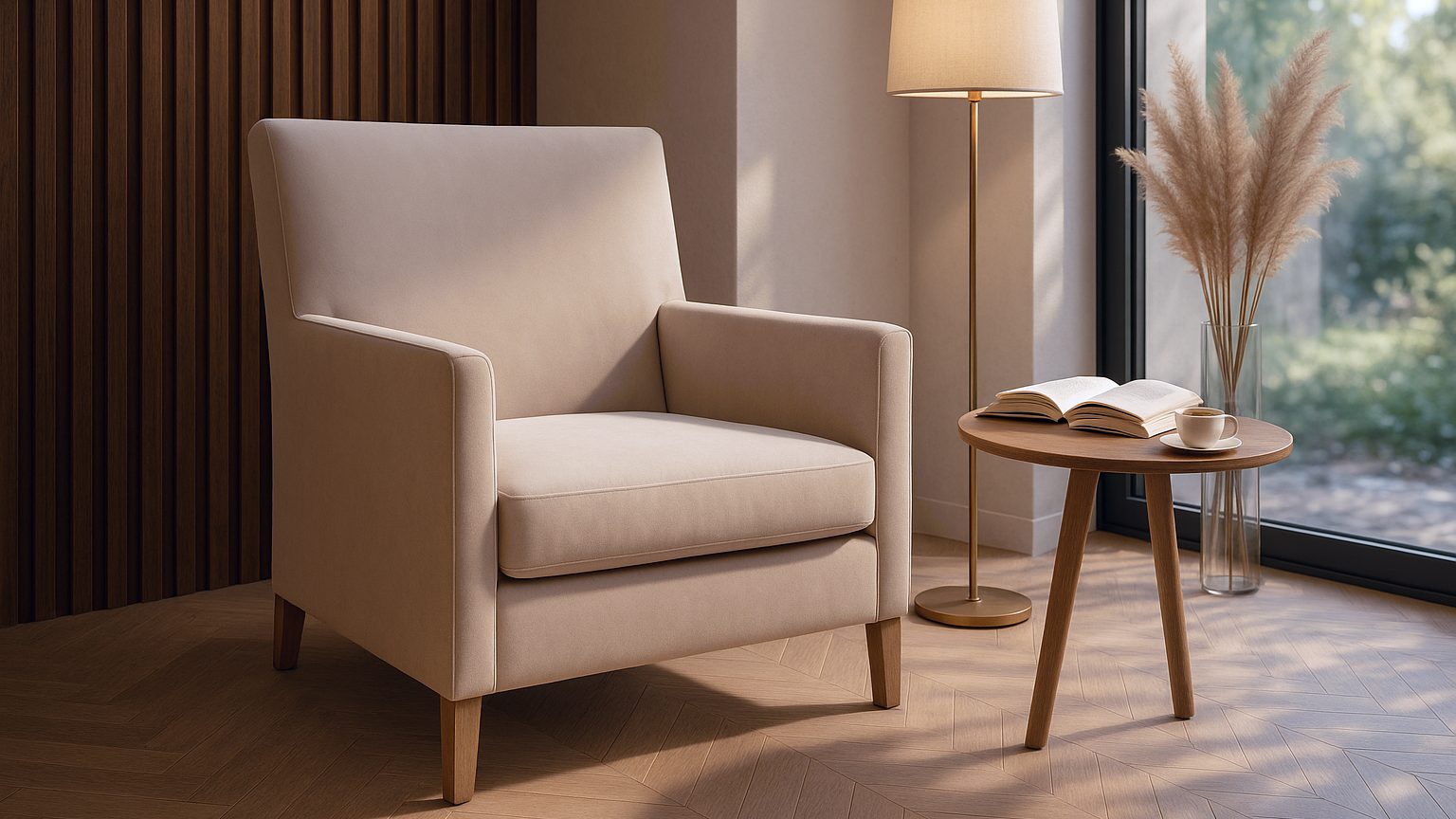
Short term apartment furniture lives a harder life than hotel furniture in one specific way: it is used by people who are unpacking a suitcase and living normally at the same time. A guest in a serviced apartment cooks, works, does laundry, and moves furniture to suit themselves, often within a stay of a few nights. The unit is then reset for the next arrival. That cycle repeats far more often than in a residential let and with less supervision than in a hotel.
We have supplied furniture for serviced residences and mixed-use developments alongside our hotel work since 1997, and the properties that hold their standard share a discipline: they specify for the changeover, not for the day one photograph. This guide covers what that means in practice, from layout and material choices to the spares strategy that keeps a building looking consistent for years.
Design for a stay, not for a lifestyle
A short-let unit has to work for a two-night business traveller and a three-week relocation guest without changing anything. That constraint should drive the specification more than any style reference.
Practically, it means a dining table that seats two comfortably and four occasionally, a sofa that converts or sits beside a chair rather than filling the room, and storage that holds a suitcase out of sight. It also means leaving floor area clear, because a guest with a case needs somewhere to put it that is not the bed.
The most common mistake is furnishing the unit as a show apartment. A show apartment is viewed for ten minutes; a short-let unit is lived in for a month and cleaned between every stay. Anything that cannot be cleaned quickly, moved easily, or replaced cheaply becomes an operational problem within the first year.
Materials that tolerate a changeover cycle
In a hotel, housekeeping is trained and supervised. In a serviced apartment, cleaning is often done by a small team against a tight turnaround, and in short-let units sometimes by an agency with less consistency. The furniture has to absorb that variance.
Upholstery should be cleanable with standard agents rather than specialist care, and the specification should name the cleaning method so the operations team can follow it. Tabletops should resist heat and alcohol, because a guest will put a pan down without a trivet. Edges should be impact-resistant, since cases are dragged past them every week. Avoid high-gloss finishes in circulation areas; they show every fingerprint and are difficult to repair without a visible patch.
Where the operator expects heavy rotation, a lighter palette with replaceable components is more practical than a dark, dramatic scheme. Dark finishes show scuffs and dust; a mid-tone with a textured surface hides both.
The furnishing schedule by unit type
| Unit type | Priorities | Pieces to avoid |
|---|---|---|
| Studio | Zoning within one room, fold-away surfaces, clear floor for a case | Large separate dining sets, deep armchairs |
| One bedroom | Work surface in the living area, wardrobe depth for a long stay | Desks that double as dressing tables and serve neither |
| Two bedroom | Two independent work zones, seating for four, storage parity | A second bedroom furnished as an afterthought |
| Penthouse | Entertaining function, durable outdoor pieces, upgrade in finish not in fragility | Delicate materials in high-use positions |
Standardise the core, vary the layer
A building with forty units does not need forty specifications. It needs one core specification, applied to every unit, plus a small number of interchangeable accent pieces that give individual units character without creating a spare-parts problem.
Keep beds, wardrobes, desks, and dining tables standard across the building. Vary the accent chair, the rug, the artwork, and the lighting. When a piece is damaged, the operations team can swap it from stock without a colour mismatch, and when the building is refreshed in year six, the accent layer can be replaced without touching the core.
This approach also helps with phased handover. In a mixed-use development where residential and serviced units are delivered together, a shared core specification lets the developer buy once and allocate later, which is useful when the final split between long-let and short-let units is decided late.
Spares and replacement planning
Budget for spares at the point of order, not after the first damaged chair. A practical allowance covers the pieces most likely to fail or be removed: dining chairs, accent chairs, bedside tables, and any item small enough to walk away.
Store them on site, not in a warehouse across the city, because the value of a spare is speed. Keep the original drawings, material references, and finish samples with the stock, so a reorder years later can be matched rather than approximated.
Compliance for residential use
Serviced apartments sit between residential and hospitality regulation, and the requirement depends on the jurisdiction and the operator's own standard. Fire performance for upholstery, emissions for board, and stability of tall storage are the three areas that come up most often.
Where the building is operated under a hotel brand, apply the brand's standard even if the local code is lighter, because the operator will audit to its own manual. Where the units are private rentals, confirm the local requirement before the order rather than after the first inspection.
Furnishing a unit that has to be reset in a day
The changeover is the operation that shapes the specification. A team with a few hours between guests needs furniture that can be cleaned in place, checked at a glance, and returned to its position without measuring. Anything that has to be disassembled, lifted, or professionally treated will either slow the turnaround or be skipped.
That argues for pieces with a defined position: a marked footprint for the dining table, a fixed bed position, and storage that closes fully so a quick check is enough. It also argues against loose cushions in quantity, decorative objects that have to be arranged, and furniture that can be dragged into a different configuration by a guest and left there.
Bedding and soft goods interact with the furniture here. A bed that is easy to make saves minutes on every changeover, and a headboard that is fixed rather than propped removes a task entirely. Where the operator supplies linen, confirm that the mattress depth and the bed platform match, because a mismatch turns a two-minute task into a five-minute one across forty units.
Finally, plan the storage of the things a guest leaves behind. A luggage rack or a defined space for a case keeps it off the bed and off the floor, and it removes an argument at inspection about what condition the unit was left in.
Frequently asked questions
Should short-let units be furnished to hotel standard?
To hotel durability, not hotel appearance. Guests expect a home-like feel, but the furniture still has to survive the same turnover and cleaning regime.
Is a sofa bed a good idea?
It adds capacity but usually sacrifices comfort in both modes. If occupancy matters, a proper sofa plus a separate occasional bed is often the better compromise.
How much storage does a serviced apartment need?
Enough for a two-week stay without leaving a case on the floor. Wardrobe depth and a dedicated luggage position matter more than total volume.
Can residential and serviced units share one order?
Yes, and it often reduces cost. Share the core pieces, specify the compliance level for the stricter use, and vary the accent layer.
What is the most replaced item in a short-let unit?
Dining chairs, followed by bedside tables. Both take constant handling and both are small enough to be moved between units.
Short term apartment furniture is a specification for turnover. Standardise the core, choose materials that tolerate cleaning, plan the spares, and the building keeps its standard long after the opening photography is forgotten.
Why global hospitality teams work with OC International
OC International (OCI) has manufactured loose and fixed furniture for five-star hotels, resorts, and serviced residences since 1997. From our manufacturing base in Dongguan we support owners, developers, design firms, and FF&E consultants across the Americas, the Middle East, and Asia with one accountable team covering design development, production, quality control, packing, shipping, and on-site installation.
What our manufacturing base delivers
- Residential and serviced-apartment programmes with a shared core specification across unit types.
- Builds engineered to CAL 117, CAL 133, TB 133, EN 1021, BS 5852, FSC timber, and CARB P2 under an ISO 9001-controlled production process.
- Material specifications written with the cleaning method attached, so operations can follow them.
- Spares produced with the original order and stored against the same finish batch.
Selected delivered projects
Our furniture has been delivered to landmark properties including the Fairmont Austin, Four Seasons Chicago, Sheraton Dhaka, Marriott Sydney, Conrad Los Angeles, and Hilton DoubleTree projects across multiple regions, each specified to the operator's brand standard and installed to opening.
Furnishing serviced apartments and specifying short term apartment furniture for a mixed-use block? Send us the unit mix and we will build the core-and-accent schedule.
See apartment furniture sets Send your unit mixYour email address will not be published. Required fields are marked *